To Use Treats or To Not Use Treats?

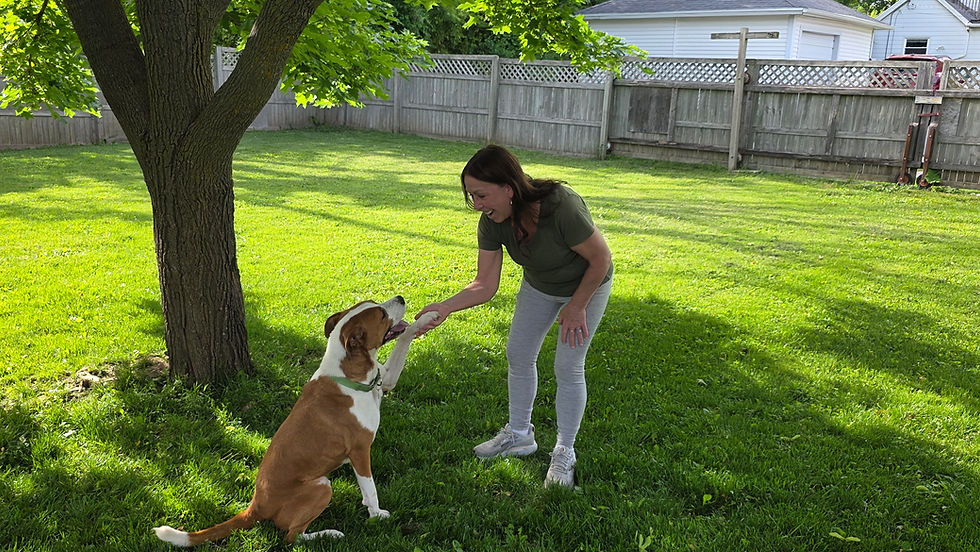
That is a question that is asked frequently. I use treats when I am teaching a dog a new obedience skill or in trick training. A reward marker is charged up and used during the training also. A reward marker is a verbal word like "YES" or a clicker which is a sound both can be used as an indicator while the dog learns she got it right and she will be rewarded. Some dogs may be fearful of the clicking sound and if the dog is fearful, I will not use the clicker. I want to use the best marker for the dog and set the dog up for success.
I will also use treats to scatter on the ground for enrichment and mind stimulation. Teaching a dog "Find It" which I use often. I will first teach the dog to "Find It" by tossing a treat and the dog goes searching for the small treat. I mark with "Yes" and continue repeating. I will take it to the next level and hide a treat and then have the dog go searching for it. Which can then take the dog to another level for scent work.
I have used treats by tossing them away from me to observe if the dog will go get it. Will dog get the treat and come back for more? I have stood with my side to a dog never making eye contact, moving or talking to them. I just toss a treat and have a conversation with the dog's handler. When I know I will be working with a dog and handler, I want to set both of them up for success. My work is about helping the dog learn and the handler to learn also. This helps to empower the dog also, because they get to make choices too. The dog can learn, not every new person is going to be a threat. This is a case where I am using treats to help in the set up and the handler is also treating the dog. Fear in dogs can be very real.
So yeah! There are times when treats are very helpful. They can be used as a reward and also to build a positive association to a stimulus.
With Behavior Adjustment Training (BAT) set ups, this is different. With these set ups the use of treats is less. I first go looking for an area to work in. I want to take a look at the area my client has in mind. The power of distance is important. I will walk the area and look around. Then if the area is a good one, then I will start teaching my client the BAT leash skills. The use of a longline and safely handling it. Understanding when to let the line out and how to follow the dog. Watching the dog and helping the dog when she needs help. A dog may just stop so it is time for the handler to stop. Take a good look at the dog, will the dog disengage on her own or does she need help. BAT leash skills can used for both long line and short 6-foot leashes also. With a shorter leash it is all about practicing keeping the leash loose. Try putting a smile on the leash.
What happens when your dog is not disengaging? Your dog needs your helping getting out to the stuck moment. You can make a kissy noise and when she disengages then I will turn with my knee bent and have the dog follow as I turn and walk away, then toss some treats on the ground. I have trained dogs to turn on cue and use a word when I want them to turn with me. Teaching a dog to turn on cue also takes rewards and this is a time; I will use treats to reinforce the behavior.
BAT empowers the dog to make good choices with help. The use of a long line gives the dog a sense of being off leash by giving more freedom. A short leash can be restricting and cause frustration.
With BAT you follow your dog and allow them to look from a distance. Mark & Move can be used also. If your dog is reactive to something. Your dog may feel fearful of other dogs, then I use areas where there are barriers for safety. A dog can learn by making good choices. I use a fake dog often before bringing in a live dog. I do this to help my client learn also. I have witnessed the stress and anxiety in people. A dog can feel this too at the end of the leash.
A reactive dog is not always about aggression either. I have taken in information and learned that the dog, has been socialized and plays well with other dogs. When the leash is put on the frustration starts up. The dog would really like to go meet the other dog.
There is a reason why I always start with my Initial Consultation. I learn more about my clients struggles, what their goals are and so much more. I am even asking about any pain the dog may be experiencing. Pain changes everything in both animals and humans.
To use treats or not to use treats? It all depends on what I am doing with my client and the dog.
As a Certified Behavior Adjustment Training Instructor - Knowledge Assessed (CBATI - KA) you can learn how to help your dog and yourself too. Schedule an Initial Consultation which can be found on my selection of packages. I use the most updated method and techniques to help you and your dog.


Comments